Hello! What colors can cats see? Unlike humans, cats see fewer colors. Their eyes work best in the dark and help them spot movement. Instead of bright colors, they focus on contrast and motion to understand their world.
Why Do Cats See Fewer Colors?
Cats evolved as night hunters. They needed sharp night vision, not bright colors. Their eyes are made to catch movement and adjust to light changes fast.
Why Do Cats See Fewer Colors? Exploring What Colors Cats Can Actually See
During the Day:
Your lovely cats can see only the following colors in the daytime:
- Your cats see blue, violet, green, and yellow.
- Red, orange, and pink look gray or brown. Did you know What Colors Can Cats See? before reading this article?
At Night:
- Cats see some blue and green.
- All cats rely on brightness and movement.
- Their Tapetum Lucidum reflects light, helping them see in the dark. But colors look dull.

Look into the enchanting eyes of a black cat – pure magic!
Try to observe and experiment with what colors your cats see at night and during the daytime. Do not forget to leave a comment after testing!
How Do Cats’ Eyes Work? Discover What Colors Cats Can See
Dear readers, our lovely cats have a special power—they have unique eyes! Their eyes help them see in the dark and notice movement. Even a low and soft sound they can understand. I was shocked when I learned this!
It is really important to know about the main parts of a cat’s eye:
- Cornea – A clear layer that helps focus light.
- Sclera – The white outer layer that protects the eye.
- Iris – The colored part that controls light.
- Pupil – A black opening that changes size to let in light.
- Lens – Focuses light on the retina.
- Retina – Sends light signals to the brain.
- Rods – Help cats see in the dark and notice movement.
- Cones – Help cats see color, but they have fewer cones than humans.
- Tapetum Lucidum – A shiny layer that reflects light and helps night vision.
- Optic Nerve – Sends images to the brain.
- Vitreous Humor – A gel that keeps the eye’s shape.
- Choroid – Brings blood to the eye.
- Aqueous Humor – A fluid that keeps the eye healthy.
- Ciliary Body – Helps the lens focus.
- Eyelids – Protect and moisten the eyes.
- Nictitating Membrane (Third Eyelid) – An extra layer for protection.
Cats’ eyes help them survive. They see well in low light and track movement fast.

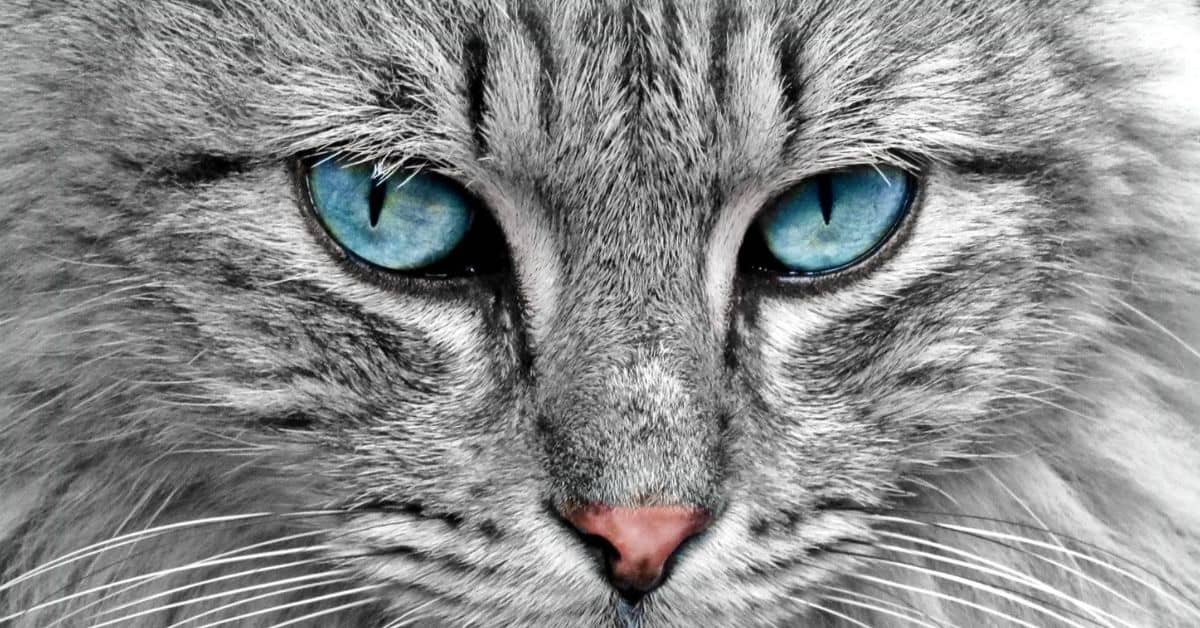
Cute Cat with Sparkling Blue Eyes – Simply Adorable!
How Do Cats See Colors? Explore What Colors Can Cats See and Why
Cats don’t see colors like we do. Their eyes have special cells called cones and rods. If you do not know what cones are, read below.
Cones – Help see color. Cats have two types:
- S-Cones – See blue and violet.
- M-Cones – See green and yellow.
- No L-Cones – Cats can’t see red or orange. These colors look gray or brown.
Since your cats have fewer cones, they don’t see many colors. Instead, they use only brightness and contrast to recognize things.
Now I Will Simply Discuss How Cats See Colors

Those big kitty eyes say it all – pure love!
Cats’ vision is different from ours:
- Dichromatic Vision – They see blue, green, and gray.
- Limited Color Perception – Humans see a full range of colors. Cats do not.
- Brain Processing – Their brains don’t detect many colors.
- Hunting Advantage – Seeing movement is more useful than seeing bright colors.
Conclusion
Cats don’t see colors like you do. They mostly see blue, green, and gray. Red and orange look gray or brown. Their vision helps them hunt and spot movement, even in low light. Though their color vision is limited, they use brightness and contrast to understand the world.
If you’re curious to learn more about your feline friend, be sure to check out our other articles packed with fascinating insights about cats! Follow us on Pinterest for a treasure trove of cute cat pictures, fun facts, and everything you need to know about your furry friends!